Hyperbolic Discounting
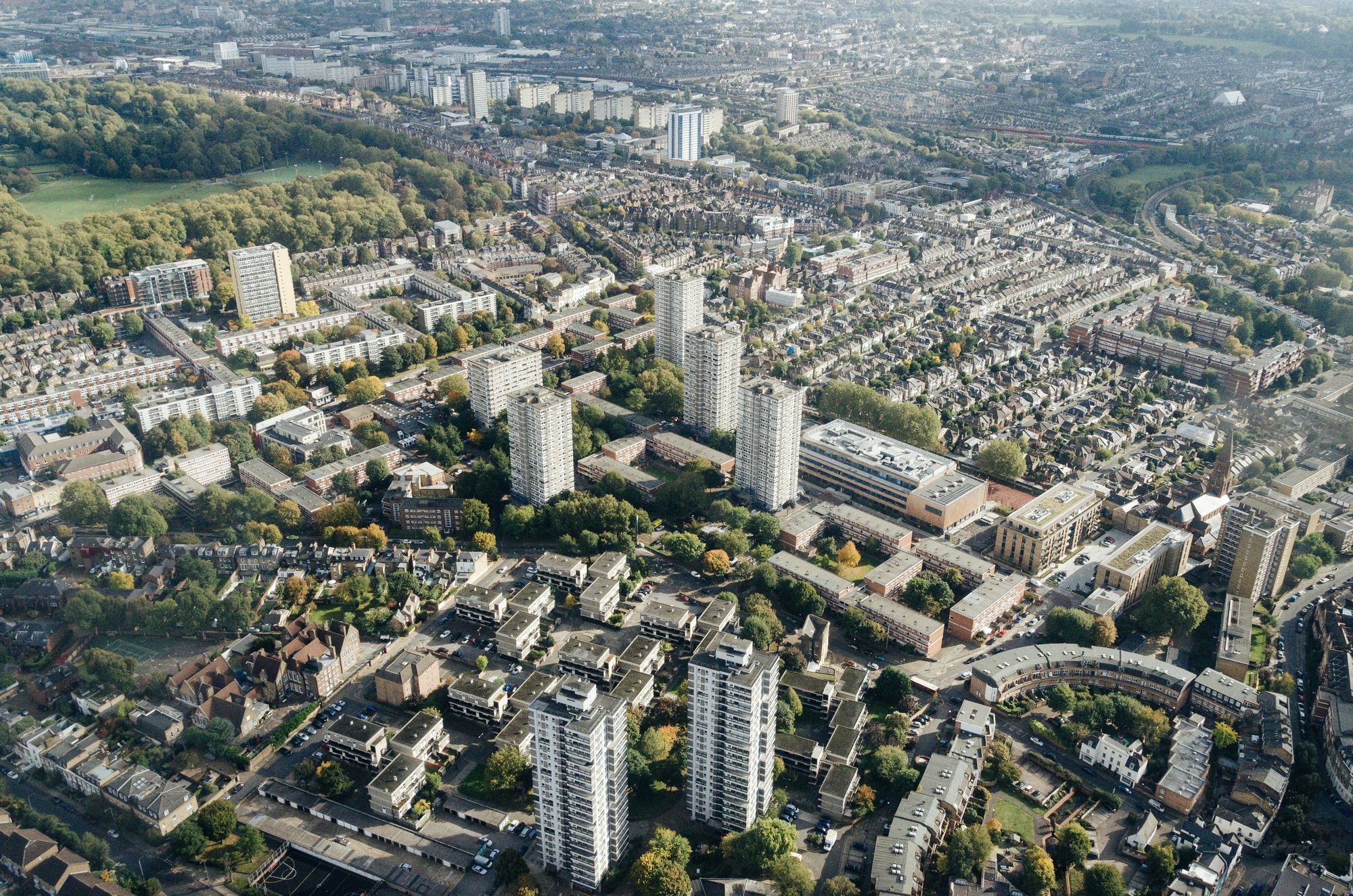
In this week's blog, we picked up on a recent article in The Telegraph arguing that Labour’s proposed plan to build 1.5 million homes essentially amounts to a “war on homeowners,” claiming that rather than solving the housing crisis, it would, in reality, reduce property values by around 2%. The framing is deliberately provocative: a plea not only to embrace nimbyism, but to factually underpin it as a lifestyle choice. Increasing supply in any meaningful way will lead to lower prices, which means lost wealth, which means a government at war with the voting class. This argument deliberately confuses short-term price reactions with long-term value creation, and in this piece will attempt to reassure people about why this matters, and to assure everyone that we are very much in the value-creation business. From a serious investment perspective, increasing housing supply is not an attack on homeowners; it is a structural reinforcement of the housing market and, by extension, the broader economy that supports property values. Let’s unpack this properly using economic theory, market psychology, and long-term capital allocation logic.
In the simplest economic model, prices are determined by supply and demand. The UK housing market has experienced decades of constrained supply planning restrictions, land banking, regulatory friction, and underbuilding relative to population growth. The result? Structurally elevated prices underpin the market. Yes, in the short run, a sudden increase in supply can put downward pressure on prices. That’s textbook economics. But the housing market does not exist in a static equilibrium. They are dynamic systems influenced by income growth, credit conditions, demographics, and productivity.
From a macroeconomic perspective, housing isn’t merely an investment vehicle. It’s core infrastructure. In growth theory, productive capacity depends on labour mobility and on the efficiency of capital allocation. When housing becomes prohibitively expensive, workers cannot move to productive areas. This constrains economic growth. In layperson's terms, slower growth equals weaker wage growth, which equals lower long-term housing demand. In other words, restricting supply to “protect” prices can undermine the very fundamentals that sustain those prices, because building houses increases geographic mobility and consumer spending, which ultimately support income, and, over the long run, rising income matches rising house prices. Property values can be increased by artificial scarcity, but they can’t be sustained. They are sustained by growing earning power.
We humans, are loss-averse. Behavioural economics, pioneered by thinkers like Daniel Kahneman, shows that people feel losses roughly twice as strongly as gains, so it’s only natural that a projected 2% drop in house prices feels threatening, even if it is trivial relative to long-term appreciation trends. But we must ask: what is the baseline? UK house prices have risen dramatically over the decades. A 2% fluctuation is well within normal volatility. Markets routinely move more than that in a quarter. Homeowners often anchor to peak valuations, a classic behavioural bias. Any deviation from that anchor feels like the destruction of wealth, even if the long-term trajectory remains intact. This is short-term thinking applied to a long-duration asset, and housing is not a day-traded instrument. It is a multi-decade store of value whose returns are driven primarily by inflation, wage growth, and credit markets. To perhaps summarise, a modest increase in supply does not erase these forces.
There are two ways property prices can remain high: artificial scarcity, which we have seen in recent years, and the much more desirable structural stability. Artificial scarcity, as much as it gives you the temporary feel-good factor of price inflation, creates serious fragility. When affordability collapses, demand becomes increasingly credit-dependent. The system becomes vulnerable to interest rate shocks, as we saw in the 2008 global financial crisis. When credit conditions tightened, overheated property markets corrected violently. By stark contrast, moderate, steady supply expansion builds resilience. Financial markets, like much of modern culture is dominated by short-term signalling, so a headline about a 2% potential price impact triggers emotional responses because humans overweight immediate outcomes relative to future gains, a concept known as hyperbolic discounting which sounds pretty fancy so we used it for the title of this blog, but in reality all it means is that we live the here and now, so we tend to align our thoughts in the same way. But property is the quintessential long-duration asset, and the way to frame the question more rationally is to ask “Will the UK economy be stronger or weaker over the next 20 years if housing supply improves?” If the answer is stronger, then the long-run effect on housing values is positive, not negative.
Our conclusion from all this is that we believe growth protects value, and our proposition and sector are central to ensuring that growth. In reality, sustainable prices require sustainable incomes, which in turn require economic growth, and economic growth requires housing accessibility. We fear stagnation far more than supply, because in markets as in nature, systems that do not adapt eventually collapse. Building homes is not a war on homeowners; it is an investment in the long-term durability of the housing market itself.
Invest & Fund has returned over £330 million of capital and interest to lenders with zero losses, showing the rigour that governs our business. To take maximum advantage of this robust and exciting asset class, please visit www.investandfund.com
Don't invest unless you're prepared to lose money. This is a high-risk investment. You may not be able to access your money quickly, and are unlikely to be protected if something goes wrong. Take 2 minutes to learn more.