Next?
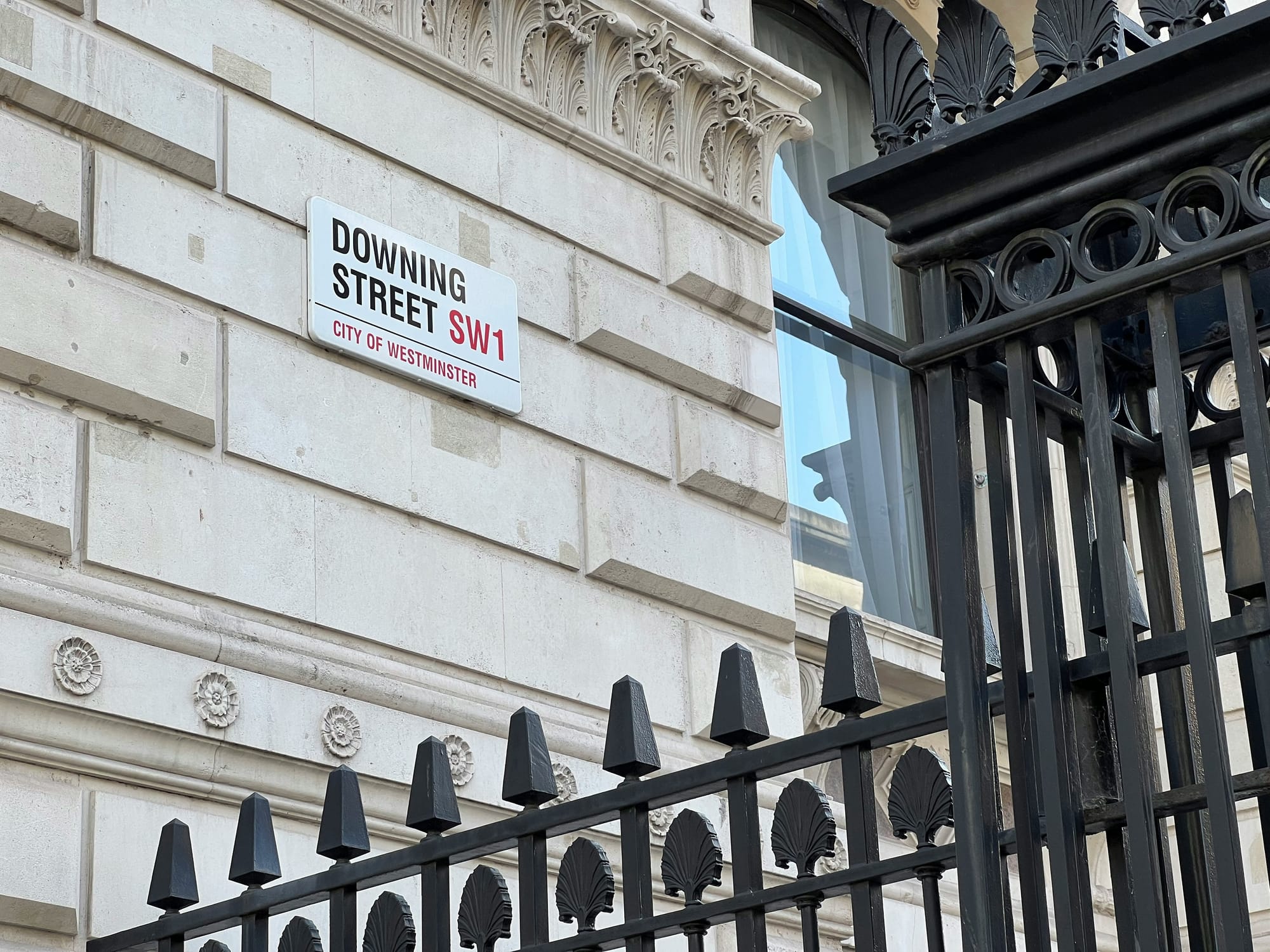
With Sir Keir Starmer announcing his intention to step down and a leadership transition expected to conclude in the autumn, the Mayor of Greater Manchester, now an MP after his Makerfield by-election win, has emerged as the clear frontrunner to become the country's next Prime Minister. A Burnham government taking office in the fourth quarter is no longer fantasy politics; it is a live planning assumption. For those of us attempting to finance housing delivery, that warrants a clear-eyed look at what such a government might actually do. Burnham is one of the few senior politicians who has made housing a genuine personal priority, with a substantial track record to read from rather than a manifesto to guess at. The picture that emerges is genuinely double-edged for the development finance sector, and the balance of opportunity and risk depends heavily on which parts of the "Manchesterism" agenda translate from city-region pilot to national policy. This is, necessarily, scenario analysis rather than prediction. But for an asset class such as ours, funding SME residential developers through staged, first-charge-secured facilities, the contours are worth mapping now.
To really understand the implications, you have to understand the underlying philosophy. Andy Burnham's record in Greater Manchester points to a state that commissions outcomes rather than simply buying outputs from the market. The flagship example is his proposal for a £40 billion borrowing programme to fund council housing, which he has framed as the largest state-backed housing intervention since the 1970s alongside a call for half a million council and social homes by the end of the decade and an argument that the whole of the government's affordable housing budget should be directed toward social rent.
Around that sit a cluster of well-established positions: devolving planning powers and housing delivery to city regions; pairing infrastructure investment with housing (the Victoria North and Mayfield regeneration schemes, and his push to reinstate the Manchester leg of HS2); rent controls and tougher enforcement in the private rented sector; interest in replacing Council Tax and Stamp Duty with a Land Value Tax; and suspending Right to Buy on new council homes to stop social stock leaking back into the private market.
None of this is neutral for development finance and our sector; as always, it’s tailwinds and headwinds, the blustery nature of the news cycle's real-world impact, but there are immediate positives to look at. The most straightforward read, in our opinion, is the most positive one. A government genuinely committed to large-scale housebuilding and regional regeneration means more development activity overall, more sites coming forward, more infrastructure unlocking land, and a broader pipeline of schemes needing finance. Burnham's instinct to rebalance investment toward the regional cities like Manchester, Birmingham, Leeds, Liverpool aligns closely with where much SME-led residential development and the lending that supports it actually occur. Planning risk is one of the hardest variables to underwrite in any development facility, and a serious devolution of planning to city regions, with social, affordable and community benefit carrying more weight in decisions, could in principle shorten and de-risk the planning stage for schemes that fit the priorities, leading to a meaningful improvement to the part of the development timeline that lenders worry about most.
Here is perhaps the crucial point of the positives: no state can directly build at the scale implied by the targets. The Greater Manchester model itself leaned heavily on partnerships; its affordable delivery has been overwhelmingly achieved through social landlords using Homes England funding and council-owned land. A government pushing hard on volume will need SME developers, and the finance that enables them, to fill the gap that direct public delivery cannot. For a Homes England Lending Alliance partner, a policy environment that channels land, grants, and political will toward affordable delivery can potentially expand the addressable market, not contract it.
So, what are the usual headwinds?
The same agenda that builds more homes also tends to make each one more expensive to build. Higher standards on energy efficiency, decent homes and building safety areas where Andy Burnham has been a notably forceful campaigner, will push up construction costs and bite into already thin developer margins. Tellingly, Greater Manchester's own deputy mayor has acknowledged that viability constraints forced compromises on net-zero ambitions in its affordable programme. For a development lender, rising costs sharpen cost-to-complete risk across the drawdown schedule and raise the chance of a scheme tipping into unviability mid-build. A material slice of development is also built for the rental market, and rent controls, however popular, tend to deter the large-scale investment that build-to-rent depends on, softening that exit and the appraisal that rests on it. This is the single PRS policy most likely to ripple directly into development appraisals.
Perhaps another serious consideration is the cost of money: a £40 billion public borrowing programme, layered on top of existing fiscal pressures, carries real interest-rate consequences. Andy Burnham has previously unsettled markets with rhetoric about not being "in hock to the bond markets". Higher gilt yields feed through to base rates, development finance pricing, and ultimately end-buyer affordability, and they shift the risk-free comparator against which our investors weigh their returns. The cost of capital is the quiet variable that can do more to development activity than any planning reform. This sentiment could also be mirrored: if we see a move toward a Land Value Tax, or wholesale property tax reform. It would be transformative, but transitions are uncertain, and uncertainty over land values is corrosive to the confidence on which land acquisition and development appraisal depend. Even welcome reform creates a pause while the market reprices. A leadership change and a new government finding its feet are, in the near term, simply a source of uncertainty: transactions become slow, decisions are deferred, and confidence dips until the policy direction firms up. For a sector that runs on forward pipeline, that lull is a cost in itself.
So, what does this mean in the immediate term?
The prudent posture is neither alarm nor exuberance, and it’s probably our favourite professional posture. The principles that define disciplined development lending rigorous appraisal, first-charge security, staged drawdowns monitored deal by deal, and conservative loan-to-GDV and loan-to-cost ratios are exactly the principles that hold up well across either a market-led or a more state-commissioned landscape. A higher-cost, higher-standard, higher-volume building environment makes underwriting discipline more valuable, not less. For investors on the platform, the headline is balance. An Andy Burnham government could expand the volume of development activity and strengthen regional markets where much of it occurs, while simultaneously raising build costs, complicating rental exits, and lifting the cost of capital. Those forces partly offset each other, and the net effect will be determined less by political slogans than by the unglamorous variables that always govern this sector: interest rates, build-cost inflation, planning throughput and the depth of buyer and renter demand.
What an Andy Burnham premiership would most demand of a development lender is adaptability and selectivity, backing schemes whose viability survives a higher-cost, higher-standard regime and whose exits do not depend on assumptions a more interventionist government might undermine. That is, in the end, the same job the sector always has. The political weather could be changing again, perhaps from overcast to some sunny spells, but the discipline never changes.
Invest & Fund has returned over £389 million of capital and interest to lenders with zero losses, showing the rigour that governs our business. To take maximum advantage of this robust and exciting asset class, please visit www.investandfund.com
Don't invest unless you're prepared to lose money. This is a high-risk investment. You may not be able to access your money quickly, and you are unlikely to be protected if something goes wrong. Take 2 minutes to learn more.